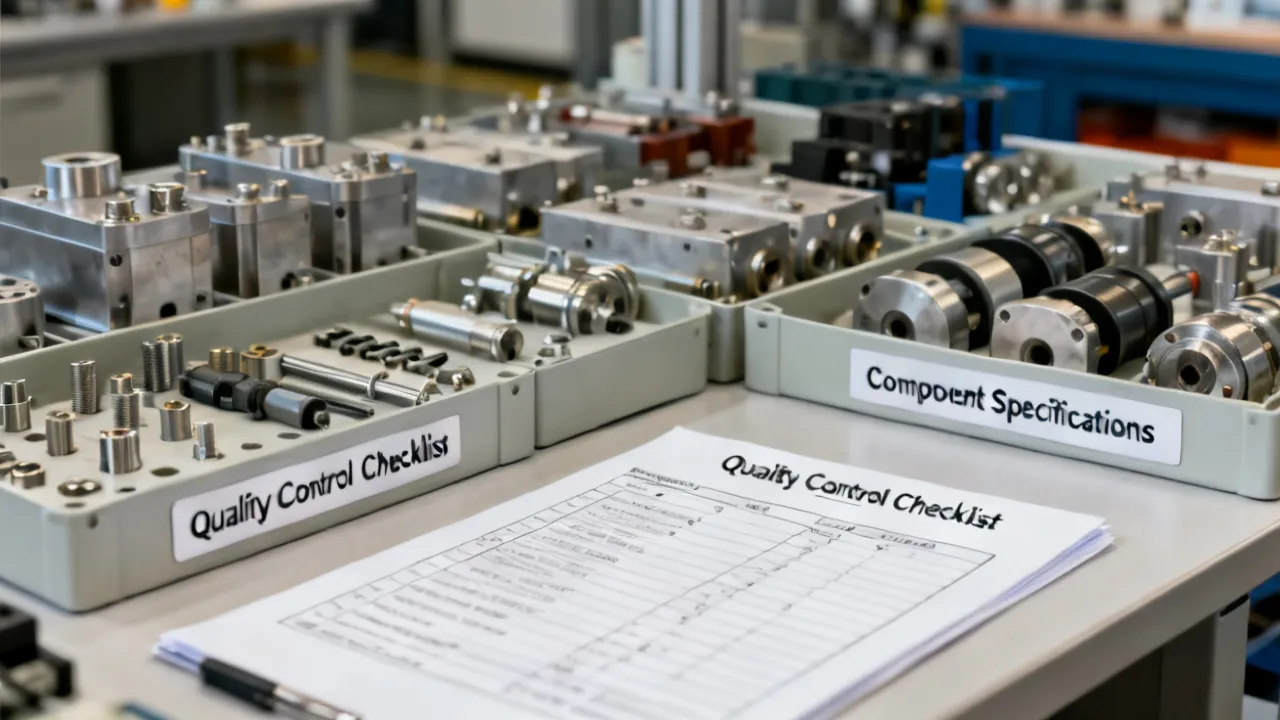
Understanding Jh Sourcing and Procurement Essentials
This guide explains Jh-oriented sourcing, supplier evaluation, and procurement planning with a practical, objective lens. It clarifies what “Jh” means in procurement contexts, how suppliers are assessed for capability and reliability, and why documentation and quality controls matter. It also outlines conditions, a comparison framework, and FAQs to support better purchasing decisions.

Why Jh Procurement Matters for Sourcing Decisions
Jh sourcing and procurement planning help organizations reduce procurement risk, align quality expectations, and maintain continuity of supply. In practice, “Jh” often appears as a shorthand marker within procurement workflows—used to identify a sourcing stream, specification set, product family, internal process category, or approval routing logic. Because the term is context-dependent, the most valuable approach is to treat Jh as a procurement classification that must be verified through documentation, supplier disclosures, and product requirements before purchasing.
From an expert standpoint, successful procurement is rarely about “finding a supplier” alone. It is about matching the right supplier capability to clearly defined requirements—then validating those requirements through evidence such as test reports, process controls, lead-time guarantees, and contract terms. When organizations use a Jh label inside their sourcing process, they typically want faster internal routing of requests and consistent evaluation across multiple categories or vendors.
However, using a classification label without governance is one of the easiest ways to create hidden risk. The procurement function may believe it is moving quickly, but it may be moving quickly with assumptions that no longer match the actual requirements, regulations, or manufacturing realities of the item being purchased. Therefore, the practical reason Jh procurement matters is that it helps an organization standardize how it translates intent (“buy this type of item”) into execution (“buy it with defined quality, defined acceptance, defined documentation, and defined remedies”).
In other words: Jh procurement is not only a naming convention; it is (or should be) a mechanism for controlling how requirements flow through sourcing, contracting, receiving, quality inspection, and performance monitoring. When done well, that mechanism makes sourcing decisions more repeatable and defensible. When done poorly, the mechanism can create confusion—such as using the wrong supplier for the wrong specification revision, applying the wrong documentation requirements at receiving, or contracting without clear remedies for nonconformance.
This article expands the concept of Jh procurement by covering what Jh typically means in procurement workflows, which supplier evaluation criteria should be objective and evidence-based, what “total cost” comparisons should include, how to request supplier documents, and how to implement step-by-step sourcing processes. It also provides a reusable comparison framework and a checklist for sound Jh purchase decisions, then addresses common questions procurement teams ask when they encounter Jh categories.
Core Meaning of Jh in Procurement Workflows
In procurement, “Jh” can function as:
- A product or specification grouping: items that share common technical standards, packaging rules, labeling conventions, intended usage, or acceptance test logic.
- A sourcing stream: a procurement channel used for certain contract structures, compliance requirements, delivery expectations, or preferred sourcing strategies.
- An internal code: a classification used by procurement teams, logistics planners, quality engineers, warehouse teams, or engineering change control coordinators to track requests.
- A quality routing category: a way to map item types to receiving inspection levels, required certificates, or traceability and record-keeping requirements.
- A compliance or regulatory bucket: an internal marker indicating which regulatory frameworks (if any) apply, such as documentation obligations, material declarations, or safety reporting needs.
Because the keyword set you provided includes “Jh” without additional context, the best practice is to confirm the intended interpretation in your organization’s purchasing documentation. That could include:
- Purchase request templates
- Bill of materials (BOM) codes and item master fields
- Product datasheets and specification sheets
- Supplier qualification forms and onboarding checklists
- SOPs for receiving inspection and nonconformance handling
- Contract templates and statement-of-work structures
Objective procurement starts with clarity of definition. Even when Jh appears as a simple label, teams should ensure that it is connected to a specific set of requirements that can be audited. If two departments interpret the same Jh code differently, procurement becomes inconsistent—and inconsistency is where risk tends to hide.
Why Procurement Leaders Use Categorization Like Jh
Organizations generally adopt classification labels such as Jh because they solve real operational problems:
- Standardization: classification helps standardize how requirements are written and how supplier evidence is requested.
- Speed: once a Jh category is defined, procurement teams can route requests to the correct approvers and apply pre-approved evaluation criteria.
- Consistency across vendors: the same classification can trigger the same quality, inspection, documentation, and acceptance rules.
- Reduced error rates: classification reduces the likelihood that receiving teams will forget certificates or that quality teams will miss inspection steps.
- Better analytics: classifications provide a stable structure for analyzing supplier performance and sourcing risk trends.
Yet the critical point is that standardization only works when classification meaning remains stable and is updated when specifications change. Jh procurement should therefore be supported by change control and periodic review—so the label continues to map to the correct technical and contractual requirements.
What Objective Supplier Evaluation Should Cover
When procurement teams treat Jh as a meaningful category, supplier evaluation becomes more structured. Industry practice commonly evaluates vendors on three dimensions: capability, reliability, and compliance. Rather than relying on informal assurances, organizations should request artifacts—documents and results—that support a defensible decision.
Key evaluation elements include:
- Quality management: certification status (if applicable), nonconformance handling practices, traceability practices, process control methods, document control maturity, and audit readiness. It is also useful to confirm whether the supplier can maintain lot-level traceability through subcontracted steps (if those exist).
- Process control: how the supplier manages variability in manufacturing, testing, calibration, packaging, and labeling. Evidence might include control plans, statistical process control (SPC) summaries, calibration records, or tool-change and stability protocols.
- Supply continuity: production capacity, production lead-time stability, upstream dependency mapping (critical components, raw materials, subcontractors), and contingency planning. A strong vendor will have documented backup sourcing or escalation plans when supply constraints arise.
- Performance history: on-time delivery record, fill-rate (for consumables), defect rates, return/rework frequency, and responsiveness to defects or returns. This can be assessed via internal scorecards, defect logs, and formal supplier reports.
- Contractual clarity: service levels, warranty terms, remedies for nonconformance, and responsibilities for inspection and acceptance. “Contractual clarity” means the contract explains what happens if the supplier ships something that fails acceptance criteria, and it states timelines for replacement or credit.
- Risk and resilience: ability to manage risks related to changes in process, material substitutions, major equipment downtime, or workforce disruptions. For many industries, this is increasingly important even when price is attractive.
To keep the process objective, ensure evaluation criteria are written, scored consistently, and stored for auditability—especially when Jh categories are used to route approvals quickly. A common governance failure occurs when procurement teams have a Jh route for speed, but quality criteria are not captured in a way that can be revisited later.
Therefore, beyond scoring, organizations should maintain a transparent record of:
- Why the supplier was selected for a given Jh category
- Which documentation justified the selection (e.g., certificates, test reports, audit results)
- Which acceptance standards apply and how they were agreed upon
- What exceptions were granted (if any) and under what conditions
- How nonconformance will be handled if issues occur after receipt
Pricing in Jh Sourcing: What to Compare (Without Overfitting)
Pricing is often the headline metric in procurement discussions, but an expert view treats price as one component of total value. For Jh-oriented procurement, comparison should include at least:
- Unit price and price basis: per unit, per batch, per shipment, or per service hour. Confirm that the “unit” being compared is identical across quotations (e.g., net weight vs gross weight, or “delivered” quantity vs “packed” quantity).
- Packaging and handling: whether the quoted price includes protective packaging, labeling, cartonization rules, temperature-control packaging (if relevant), and required documentation included in the shipment.
- Transportation and duties: delivered terms aligned to Incoterms or your internal delivery responsibility structure, including freight, insurance, customs clearance responsibility, and potential handling fees.
- Testing and inspection costs: which party pays for incoming inspection, third-party testing, certificates required for acceptance, and any pre-shipment inspection fees.
- Lead time and risk premiums: faster delivery or tighter schedules may raise cost; conversely, long lead times may increase inventory carrying risk, stockout risk, and schedule risk. A purely lowest unit price approach can fail when schedule sensitivity is high.
- Yield and rework exposure: costs connected to rejects, replacements, warranty claims, and downstream troubleshooting. Even when unit price is low, poor yield can make the effective cost significantly higher.
- Change-management and qualification costs: if the supplier changes material or process, requalification might be required depending on the Jh category. That future cost should be considered when comparing suppliers.
- Administrative and receiving workload: a supplier that consistently provides complete documentation and clear traceability can reduce receiving delays and quality team workload.
If you have internal price ranges, it can help to structure them around these value drivers. However, avoid presenting exact “price numbers” as universal facts unless they are supported by a specific quotation or contract record. In real procurement negotiations, multiple factors can change cost: shipping methods, certificate types, packaging changes, and order quantities.
One disciplined approach is to compare each quotation using a consistent “Total Value” model for each Jh category. This model can be lightweight—still better than ad hoc discussion. For instance, you might include: unit cost, logistics cost, estimated inspection cost, estimated failure cost (based on historical defect rates or quality risk), and estimated schedule risk penalty (if relevant). Even a simplified approach improves decision-making quality and reduces disputes.
Supplier Details to Request for Jh Categories
Supplier requests should be targeted to the Jh classification requirements. In practice, procurement documents often request:
- Company profile: registered entity details, locations of production, operational scope, and details about whether the supplier manufactures in-house or relies on subcontractors for critical steps.
- Quality evidence: test certificates, inspection reports, calibration evidence (when applicable), nonconformance resolution workflow, corrective action/Preventive action (CAPA) process summaries, and traceability artifacts.
- Compliance and documentation: relevant regulatory statements, material declarations, compliance with relevant standards (as applicable), and safety data (where applicable). The goal is to ensure the supplier can provide what your receiving and quality teams will require.
- Operational information: capacity estimates, batch traceability approach, tooling and process stability notes, and evidence of process capability (if the item’s specifications require it).
- Logistics capabilities: packaging specs, labeling conventions, delivery planning steps, and documented lead-time assumptions (including order acknowledgment and shipment scheduling practices).
- Change control approach: how the supplier handles process/material changes and how they notify customers—especially relevant for Jh categories that require re-qualification.
- Documentation completeness commitment: whether the supplier has standard document packs (e.g., certificate of conformity, CoC; packing list; traceability documents) and how they ensure correct inclusion in each shipment.
By aligning the requested documents with the intended Jh category, you can reduce procurement “churn”—the back-and-forth that often arises when requirements are vague or when procurement asks for documents that do not actually support acceptance.
A useful procurement practice is to create a “Jh Document Pack Matrix.” For each Jh category, list:
- Required documentation at proposal stage (RFI/RFQ)
- Required documentation at pre-shipment stage (if applicable)
- Required documentation at receiving stage
- Optional documentation (only if risk increases)
- Who checks each document type (procurement, quality, warehouse, engineering)
This practice turns a category label (Jh) into an operational system. It also makes it easier to audit decisions and train staff consistently.
Operational Steps for Jh Sourcing and Procurement Planning
An expert procurement program converts strategy into repeatable steps. Below is a step-by-step approach you can adapt to Jh categories in your organization.
- Confirm Jh definition: validate what Jh means in your environment—product group, contract stream, or specification set. Ensure everyone involved is looking at the same code-to-requirements mapping.
- Translate requirements into measurable criteria: convert technical needs into acceptance criteria (tolerances, documentation requirements, inspection steps). Avoid “soft” requirements such as “meets quality standards” without specifying what those standards mean.
- Identify candidate suppliers: use your supplier database, industry networks, or qualified vendor lists—then shortlist based on capability for that Jh category. Confirm the supplier has experience with your exact or functionally similar acceptance criteria.
- Issue a structured RFI/RFQ: ask for documentation relevant to the Jh category, including quality evidence and lead-time assumptions. Include clear instructions for quote structure to avoid mismatched unit bases.
- Score suppliers consistently: evaluate using predefined criteria covering quality, reliability, logistics, compliance, and change-control approach. Use scoring guidance to reduce subjectivity.
- Validate through sampling or qualification: conduct incoming inspection, factory audits, or pilot runs where risk justifies it. Qualification should be aligned with your acceptance criteria and traceability expectations.
- Contract and align on conditions: ensure terms define lead time, acceptance, warranties, remedies for defects, documentation obligations, and change control notification requirements.
- Implement receiving controls: verify documentation at receipt, apply inspection protocols, and maintain traceability. Ensure the receiving team knows which Jh category rules apply to the order.
- Monitor performance: use scorecards and feedback loops, capturing defects, delivery performance, responsiveness to corrective actions, and documentation completeness. Include leading indicators, not only lagging ones (e.g., document rejection rates, partial shipments).
- Review and improve: periodically review Jh category effectiveness. If repeated issues occur (e.g., missing certificates or chronic lead-time delays), update the category’s documentation matrix, acceptance criteria, or supplier evaluation thresholds.
This approach reduces reliance on subjective impressions and strengthens procurement defensibility. It also improves internal alignment: procurement, quality, logistics, and operations share the same definition of “what good looks like” for the Jh category.
How Jh Categories Should Connect to Quality and Receiving Controls
One of the most important operational aspects of Jh procurement is ensuring that classification does not remain in procurement systems only. Jh must connect to:
- Inspection plans: receiving inspection type and sampling logic (full inspection vs sampling vs waiver criteria)
- Acceptance criteria: what measurements or test outcomes determine accept/reject
- Documentation checks: certificate types, traceability documents, compliance statements, and required data fields
- Nonconformance procedures: where to route NCRs, RMA processes, and CAPA expectations
For example, two items might look similar, but if one Jh category requires traceability to lot numbers and another does not, then your receiving team will need to handle them differently. Similarly, if one category requires pre-shipment inspection while another does not, procurement and quality must coordinate at the contract stage to ensure the supplier understands what they must do before shipping.
When organizations fail here, receiving teams become forced to improvise. That improvisation can result in inconsistent decisions—like accepting a shipment due to operational pressure even though documentation requirements were missing. Those decisions then ripple into schedule risk, cost overruns, and rework.
Comparison Table: Supplier Options for Jh Categories (No Links)
The following comparison framework can be used to evaluate supplier options for Jh-oriented sourcing. It is designed to be objective and reusable. Since your prompt did not provide specific cities, countries, price points, or named suppliers, the table uses placeholders you can map to your internal data sources.
| Evaluation Dimension | Supplier A (Candidate) | Supplier B (Candidate) | Supplier C (Candidate) |
|---|---|---|---|
| Jh Category Fit (Spec Alignment) | Meets / Partially meets / Not verified | Meets / Partially meets / Not verified | Meets / Partially meets / Not verified |
| Quality Evidence Provided | Test reports, certificates, traceability artifacts | Test reports, certificates, traceability artifacts | Test reports, certificates, traceability artifacts |
| Inspection & Acceptance Process | Clear acceptance criteria and documented remedies | Clear acceptance criteria and documented remedies | Clear acceptance criteria and documented remedies |
| Lead Time Reliability | Historical consistency and contingency clarity | Historical consistency and contingency clarity | Historical consistency and contingency clarity |
| Compliance & Documentation | Regulatory statements and required material declarations | Regulatory statements and required material declarations | Regulatory statements and required material declarations |
| Total Cost Factors | Unit price + logistics + inspection + risk exposure | Unit price + logistics + inspection + risk exposure | Unit price + logistics + inspection + risk exposure |
| Contractual Remedies | Warranty, returns, replacement timelines | Warranty, returns, replacement timelines | Warranty, returns, replacement timelines |
| Operational Readiness | Capacity evidence, batch traceability, packaging specs | Capacity evidence, batch traceability, packaging specs | Capacity evidence, batch traceability, packaging specs |
To make the table actionable, many teams add a scoring method. For example, you can assign numeric scores (0–3) for each category, then weight the categories based on the risk profile of the Jh item. A high-risk Jh category (critical to safety or compliance) might give greater weight to quality evidence and traceability than to unit price. A low-risk category might weight speed and logistics more.
Conditions and Requirements for a Sound Jh Purchase Decision
To avoid procurement failures, Jh sourcing decisions should satisfy conditions that reduce ambiguity and risk. Use these as a checklist during approvals and contract execution.
- Defined acceptance criteria: written inspection steps and objective acceptance/rejection thresholds. Acceptance criteria should be testable and should reflect your quality standards and regulatory requirements if applicable.
- Documentation at receipt: certificates, traceability, and compliance artifacts required by the Jh category. Ensure documentation fields match what receiving and quality systems expect (e.g., correct lot numbers, dates, signatures, certificate identifiers).
- Lead-time and schedule terms: explicit responsibility for delays and communication cadence. Contracts should specify when the supplier must notify you (e.g., delay beyond X days, material shortage, shipment rescheduling).
- Nonconformance handling: clear RMA/return process, root-cause expectations, and corrective action timelines. Include escalation paths for repeated nonconformance.
- Traceability: batch or lot identification that allows investigation if issues arise. Traceability requirements should be consistent with acceptance logic (e.g., where a traceable lot is required for recall-like actions).
- Change control: process, material, or supplier change notifications tied to re-qualification needs. The contract should specify what constitutes a “material change” versus a minor update.
- Data retention: storing supplier submissions, test evidence, and receiving inspection results for the time required by internal policy or regulatory obligations.
- Clear responsibilities: who handles inspection, who pays for replacement, who approves substitutions, and who releases product for use.
- Packaging and labeling verification: packaging and labeling rules that prevent mix-ups, damage, or incorrect identification at receiving.
- Contingency planning: documented supplier contingency steps for capacity constraints, critical supply shortages, or logistics disruptions.
These requirements are consistent with established quality and procurement governance principles used across regulated and non-regulated industries. The difference is that Jh procurement operationalizes these requirements so teams do not need to rediscover them each time they buy.
Industry Context: Why Structure Beats Assumptions
Procurement teams often face a familiar trade-off: speed versus rigor. Jh categories can be helpful for speed—routing purchases through standardized evaluation—but they can also create a risk if the category meaning is not verified. A disciplined approach uses Jh labeling as a starting point, then confirms requirements through evidence.
For reliability, many organizations align supplier practices with recognized quality management systems and audit methods. For example, ISO 9001 provides a widely adopted framework for quality management system requirements. While ISO 9001 does not “guarantee” supplier performance, it gives a structured baseline for process control, continuous improvement, and internal accountability. Procurement teams can use this framework as part of evidence collection and evaluation.
Relevant standard background sources (for general governance principles) include:
- ISO 9001: Quality management system requirements (use as a reference for quality system baseline thinking).
- ISO 9000 series: Quality management concepts and supporting vocabulary.
For risk and supply continuity context, organizations also commonly reference supply chain risk approaches published by recognized institutions such as the World Economic Forum’s supply chain work, and risk management guidance such as ISO 31000 (risk management principles). These are general frameworks rather than vendor-specific metrics.
The key connection back to Jh procurement is this: classification works best when each Jh category implies a specific level of governance rigor. A category might be “routine” and require light documentation checks, while another might be “critical” and require deeper evidence and qualification steps. Using a single process for every Jh code can be inefficient, but using an ad hoc process for every procurement event can be risky. The right middle ground is to set category-based governance.
How to Determine the Risk Level of a Jh Category
Not every purchased item carries the same level of risk. Even if Jh is simply an internal label, you can improve outcomes by assigning a risk level to each Jh category. A practical method is to consider:
- Criticality to operations: does failure stop production, cause downtime, or create safety risks?
- Regulatory exposure: are there compliance obligations where documentation and material declarations are essential?
- Downstream impact: will a quality issue cause rework, warranty claims, customer dissatisfaction, or product recalls?
- Complexity of inspection: can you reliably test acceptance at receiving, or does testing require expensive equipment or long lead times?
- Supplier concentration risk: is there limited alternative capacity or limited supplier competition for this Jh category?
Once you assign a risk level, you can tailor the procurement steps accordingly. High-risk Jh categories may require:
- Pre-shipment inspection or third-party verification
- Factory audit evidence
- Enhanced traceability requirements
- Pilot runs with deeper sampling
- Higher frequency performance monitoring
Lower-risk Jh categories may allow streamlined processes while still ensuring minimum documentation and acceptance checks. This prevents procurement from either overburdening the business or under-protecting it.
Practical Examples of Jh Governance in Action
Because “Jh” is context-dependent, examples help illustrate how it should function as a classification tied to requirements. Below are practical scenarios procurement teams commonly face.
Example 1: Jh as a specification grouping
Imagine an organization buys “fastener kits” used in multiple products. The internal database includes an item code “Jh-FT-01” that indicates a specific fastener specification set: material grade, coating rules, and labeling requirements. If procurement treats Jh-FT-01 as a true classification, it requests the same evidence from suppliers each time: material declarations, coating thickness data, certificate of conformity, and traceability to lot numbers. Receiving teams use that label to verify certificates and apply consistent sampling rules.
If procurement instead treats “Jh” as a meaningless label (or if the definition is outdated), a supplier might ship fasteners that visually look correct but fail coating thickness requirements. That failure could cause assembly issues, premature wear, and warranty risk.
Example 2: Jh as a sourcing stream
Some organizations set up sourcing streams based on contract structures. For instance, a Jh category might indicate that the item is procured under a “framework agreement” with fixed delivery terms. Procurement teams may use the Jh stream to expedite purchasing without re-negotiation for each order. However, the framework agreement must still incorporate quality requirements and documentation expectations for acceptance.
In this example, a disciplined Jh governance process ensures that the framework contract includes clear acceptance criteria, remedies, and documentation obligations. Otherwise, speed can result in disputes at receiving because suppliers interpret the framework as “price-only” procurement rather than quality-driven procurement.
Example 3: Jh as a compliance bucket
For certain categories—like items requiring safety documentation—Jh might indicate which compliance artifacts are required (e.g., declarations, test reports, or SDS sheets). If procurement uses Jh properly, it ensures those documents are obtained at the right stage. Receiving teams reject shipments that do not include required documentation (or hold them until documents arrive, depending on policy). This prevents operational delays and reduces audit exposure.
These examples show that Jh procurement governance is not theoretical. It directly affects whether suppliers deliver what you think you ordered and whether your organization can prove it.
Supplier Selection: From RFI/RFQ to Qualification
When organizations adopt Jh categories, supplier selection becomes more predictable—if the selection process aligns with evidence requirements. A mature approach often looks like:
- RFI for feasibility: confirm the supplier can meet the Jh requirements before investing in full RFQ evaluation. Ask targeted questions: capability, traceability, documentation support, and lead time assumptions.
- RFQ for evidence-based proposals: request formal quotations with a required document pack. For example, include required certificates or provide a statement that they can produce them per the acceptance plan.
- Evaluation using the Jh scorecard: apply consistent weighting. Quality evidence and compliance should matter more for high-risk Jh categories.
- Qualification or sampling: for new suppliers or higher risk categories, validate with samples or pilot runs. Use documented acceptance criteria.
- Contracting and alignment: incorporate acceptance criteria, documentation obligations, and remedies. Make sure supplier obligations match internal receiving practices.
Procurement teams should also establish thresholds for disqualification. For instance, if a supplier cannot provide traceability documentation for a Jh category that requires it, they might be disqualified unless an exception is explicitly approved and the risk is accepted by leadership.
Documentation and Traceability: The Hidden Backbone of Jh Procurement
Many procurement organizations focus on specifications, but the day-to-day operational success of procurement often depends on documentation and traceability. “Jh” procurement should therefore treat documentation as part of acceptance, not as an administrative afterthought.
Traceability can include:
- Lot or batch identifiers
- Production dates
- Test results linked to specific lots
- Material declarations that tie materials to compliant sources
- Records of process parameters (where required)
When traceability is weak, your organization loses the ability to investigate root causes. That can lead to:
- Extended downtime because issues cannot be contained
- Scrap and rework because you cannot isolate affected lots
- Audit risk because you cannot prove compliance
- Customer risk if issues cannot be resolved quickly
Therefore, Jh procurement must ensure traceability requirements are clearly communicated at the RFQ and contract stage, then verified at receiving. This prevents “document delays” where suppliers promise traceability later but cannot deliver it during receiving.
Receiving Control and Handling: Ensuring Jh Rules Are Followed
Receiving is where classification meets reality. A purchase order might specify Jh category requirements, but receiving teams will only follow those requirements if the operational tools and instructions support them.
To make receiving control effective for Jh categories:
- Ensure purchase orders include Jh category codes or direct references to the Jh requirement set.
- Maintain receiving checklists per Jh category.
- Automate document verification where possible (e.g., require upload of certificate types before goods receipt approval).
- Define hold/release logic: what happens if documentation is incomplete? what happens if test results are missing or inconsistent?
- Train receiving staff on how to interpret acceptance criteria for each Jh category.
In organizations with multiple shifts or multiple warehouses, consistent receiving is especially important. Jh categories provide a mechanism for consistency, but only if receiving procedures are standardized and tied to those categories.
Contract Clauses That Matter for Jh Sourcing
Even the best supplier evaluation can fail if the contract does not define how acceptance and remedies work. For Jh procurement, key contract clauses typically include:
- Quality and acceptance terms: reference to specific specifications and acceptance criteria; define inspection and acceptance responsibilities.
- Documentation obligations: required certificates and traceability documents per shipment; define acceptable formats and timelines for submission.
- Nonconformance and warranty terms: replacement or return timelines; warranty start date; how defects are handled; RMA process.
- Lead time commitments: order acknowledgment timeline; shipping schedule commitments; responsibility if lead times slip.
- Change control and notification: supplier obligations to notify customers of changes; requirement to obtain approval for changes that affect compliance or performance.
- Right of audit: if your governance requires audits, specify the supplier’s obligation to support audits.
- Escalation and dispute resolution: define escalation steps for repeated issues and how disputes are managed.
For procurement teams using Jh categories, it can be helpful to maintain a “Jh Contract Clause Library.” Each Jh category can point to the clause set appropriate for the risk level. That reduces contract negotiation cycle time and avoids leaving critical terms ambiguous.
Performance Monitoring After Purchase: Closing the Jh Loop
Jh procurement should not stop at supplier selection. After purchasing, performance monitoring is what confirms whether the Jh classification was correct and whether the supplier can sustain expectations.
Common performance metrics include:
- On-time delivery: percentage delivered on or before promised dates
- Documentation completeness: percent of shipments with complete certificates and correct traceability documents
- Quality outcomes: defect rates, nonconformance frequency, and root cause severity
- Response time: how quickly the supplier acknowledges nonconformance and proposes corrective actions
- Corrective action effectiveness: whether corrective actions prevent recurrence (not just close issues)
- Fill rate / order fulfillment: relevant for consumables and certain service procurement
To make the “Jh loop” effective, link performance monitoring back to the Jh category configuration. If performance issues repeatedly occur for a specific Jh category, it may indicate that the category’s documentation matrix is insufficient, acceptance criteria are unclear, or supplier evaluation thresholds are too lenient.
Change Control: Keeping Jh Categories Accurate Over Time
Jh categories can change over time due to:
- Regulatory changes affecting documentation and compliance requirements
- Internal design changes that alter specifications or acceptance criteria
- Supplier process changes that affect performance and product characteristics
- Lessons learned from nonconformance events
Because Jh labels are used for routing and decision logic, change control is essential. An organization should define:
- Who is responsible for updating Jh definitions when specifications change
- How the update propagates to purchase order templates and item master records
- How old inventory or legacy lots are handled (if relevant)
- What triggers re-qualification of suppliers for a given Jh category
A common failure pattern is that procurement updates the Jh category mapping in one system but forgets to update receiving inspection checklists or contract templates. The result is inconsistency. Therefore, Jh governance should include system synchronization steps and ownership clarity.
FAQs About Jh Sourcing, Supplier Selection, and Procurement
1) What does “Jh” mean in procurement?
“Jh” typically functions as a procurement classification or internal label in workflows. Its exact meaning depends on your organization’s documentation—commonly reflecting a product/spec group, sourcing stream, request category, quality routing bucket, or compliance requirement set. You should verify the definition in your purchase requirements, item master fields, or internal SOPs before evaluating suppliers.
2) How should I evaluate supplier reliability for Jh categories?
Use objective criteria such as lead-time performance history, documented process controls, traceability practices, nonconformance rates, and quality evidence (test reports, certificates, and nonconformance procedures). Apply consistent scoring and validate with inspections or pilot orders when risk warrants it. Reliability also includes the supplier’s ability to deliver complete documentation on time.
3) Should pricing be the deciding factor?
Not by itself. Expert procurement compares total value—unit cost plus logistics, inspection/testing, lead-time risk, defect exposure, and contractual remedies. A slightly higher unit price can be economically preferable if it reduces rework, delays, acceptance failures, or warranty claims. The best approach is to compare pricing using a consistent model per Jh category.
4) What documents are usually required for Jh purchases?
Common requirements include quality certificates, traceability/lot identification documents, compliance statements (as applicable), packaging and labeling specs, and inspection or test results tied to acceptance criteria. The exact list should match the Jh category requirements in your specifications and receiving inspection plan.
5) What are typical contract conditions for Jh sourcing?
Contracts should define acceptance criteria, remedies for defects (replacement/return timelines), warranty scope, delivery responsibilities, documentation obligations, and change control requirements. Clear remedies and schedule terms reduce operational disputes and make decisions defensible when disputes occur.
6) How do I handle a supplier that does not meet Jh documentation needs?
Use a structured escalation: request missing documents, clarify whether deviations are acceptable under your specifications, and re-evaluate risk. If the supplier cannot provide evidence required for acceptance (e.g., traceability or test results), consider disqualification or require a qualification step before scaling volume. Also record the issue in performance monitoring so future Jh decisions account for documentation risk.
7) Can Jh categories change over time?
Yes. Specifications can evolve due to regulatory updates, internal design changes, process improvements, or lessons learned from nonconformance. Jh classification should therefore be governed by change control so routing, evaluation criteria, receiving inspections, and supplier expectations remain aligned. Periodic reviews are recommended to keep Jh definitions current.
8) Are there standard references for supplier quality expectations?
Quality management frameworks such as ISO 9001 are widely used as a baseline for quality system expectations. In procurement practice, these references help teams structure evidence collection and audit readiness, though actual performance must be verified through category-specific acceptance requirements and evidence. For risk management and broader governance, ISO 31000 and other recognized frameworks can support structured thinking.
Conclusion: Making Jh Sourcing Predictable Through Governance
Jh sourcing is most effective when treated as a disciplined procurement classification rather than a vague label. By defining the Jh meaning through documentation, evaluating suppliers on quality evidence and operational reliability, comparing total value rather than unit price alone, and ensuring receiving and contract governance align with the Jh category requirements, procurement teams can make decisions that stand up to scrutiny and support consistent delivery.
Whether you are standardizing purchasing workflows, improving supplier governance, or reducing procurement risk, the principles outlined here—clarity, evidence, documented acceptance, controlled change, traceability, and feedback loops—remain the foundation of sound procurement. When Jh is governed properly, sourcing becomes predictable. When it is not, the organization inherits avoidable risk across procurement, quality assurance, operations, and compliance.
-

A Guide to Cost-Efficient Small Electric Cars for Seniors
-
Mastering Debt Consolidation: Boost Your Credit Score and Manage Interest Rates
-
Your Guide to Loans, Credit Checks, and Interest Rates
-
Affordable Independent Living: Finding the Right Senior Housing
-
Guide to Senior Living Apartments: Affordable and Comfortable Environments