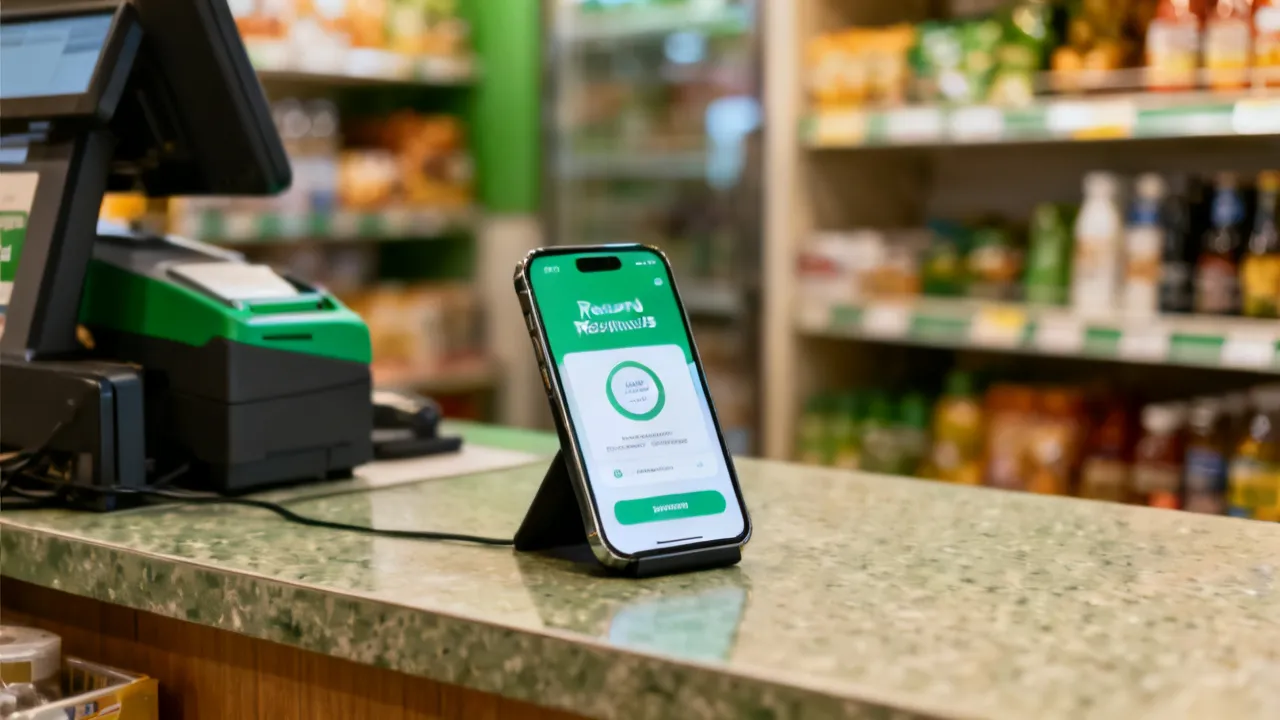
Digio Livelo: A Practical Guide to Rewards Management
This guide explains how Digio Livelo rewards work, what to check before applying, and how to manage offers responsibly. It also provides objective background on how rewards ecosystems typically function, including eligibility rules, redemption mechanics, and risk considerations related to promotional programs.

What You Should Know First About Digio Livelo Rewards
Digio Livelo is best approached as a structured rewards relationship where eligibility, earning rules, and redemption conditions shape the overall value. If you’re evaluating Digio Livelo for routine spending or for a disciplined reward-planning routine, the most important step is to understand the specific mechanics behind points accumulation and how offers convert into benefits—because the “top deal” depends heavily on your usage pattern and on the current program terms.
From an industry perspective, rewards programs are designed to align member behavior with partner incentives. That alignment can be beneficial, but it also means the real-world outcome depends on timing, category rules, partner availability, and the fine print. In other words, Digio Livelo is less about a single headline promise and more about consistent, condition-aware management.
To make this practical, you want to think like an operator and a consumer at the same time: understand the process, then decide if your lifestyle and spending habits match that process well enough to generate net value. This guide expands on the “how to evaluate” mindset so you can make a more confident decision—especially when the program’s value isn’t obvious at first glance.
Objective Background: How Rewards Ecosystems Typically Work
Rewards systems like Digio Livelo generally operate through three layers:
- Issuing and earning layer: A financial or retail issuer tracks eligible transactions and awards points under defined criteria.
- Orchestration and catalog layer: A rewards platform or partner network structures how points can be used (e.g., discounts, merchandise, travel-related benefits, or other catalog items).
- Governance and compliance layer: The program maintains rules for eligibility, expiration, exclusion categories, fraud prevention, and dispute resolution.
Even when a program appears simple on the surface, the operational details—such as whether points are credited fastly, whether certain merchant categories are excluded, and how seasonal promotions differ from standard earning—often determine satisfaction.
For example, two members can both spend “money” but earn different results if one member’s purchases fall into eligible categories and the other’s purchases fall into excluded categories. Similarly, two members can have the same point balance but experience different net value if one member redeems at a time when rewards are plentiful and the other member redeems when inventory is limited or when conversion rates are less favorable.
So the “ecosystem” is not just a marketing wrapper—it’s a set of operational rules that translate your day-to-day behavior into points, then points into benefits.
Why Digio Livelo Deserves an “Operations View” Instead of a “One-Time Decision”
A common mistake consumers make is to treat rewards as a one-time decision. In practice, Digio Livelo should be managed like a small ongoing system, where you periodically monitor and adjust to keep outcomes aligned with your expectations.
Instead of asking only, “Is this program good?” ask these operational questions:
- Current earning multipliers or promotions: These may change over time. You want to know when an increased earning period begins, whether it has caps, and whether it is limited to certain merchant categories.
- Redemption windows: Whether points can be used immediately or only after a waiting period influences your ability to act quickly when you find a good deal.
- Minimum redemption requirements: Some programs require you to reach a threshold before you can redeem; this affects whether it’s worth engaging for smaller purchases.
- Reward availability: Popular items can be limited. If you wait too long, you may discover that your preferred reward option is no longer available or has changed.
- Expiration or dormancy rules: Points can sometimes expire or become inactive if there is no activity during a defined period.
When you manage those variables, the program’s value becomes more predictable, and you avoid frustration caused by mismatched expectations. It also makes your planning more rational: you can decide whether to direct certain spending toward eligible merchants or whether to postpone redemption until the program has better options.
In other words, Digio Livelo rewards are not “free money,” but they can be effectively managed value—provided you treat the program as a workflow.
Key Checks Before You Commit to Digio Livelo
Before relying on Digio Livelo for future benefits, examine the elements below. These are standard due diligence points used across consumer rewards industries. Even if Digio Livelo’s interface looks straightforward, the real value is usually determined by these behind-the-scenes rules.
1) Eligibility and activation requirements
Rewards programs frequently include onboarding requirements (e.g., account verification, linking an account, confirming participation, or completing a one-time enrollment step). A “participating” status can be conditional—for instance, you might need to activate a promotion, opt in to partner offers, or meet specific verification criteria.
Practical implications:
- If you enroll but don’t complete verification, transactions may not qualify.
- If you enroll during an ongoing promotion, you may only qualify for parts of the promotional period.
- If you change devices or account credentials, you may interrupt eligibility unless you maintain secure and consistent account linking.
2) Transaction eligibility (what earns, what doesn’t)
Not every purchase is treated equally. Some programs exclude categories such as fees, certain financial services, or specific merchant types. This is particularly important for budgeting because program value depends on which spend categories actually earn points.
Typical “exclusion categories” to look for in any loyalty structure:
- Fees and interest charges: Some programs exclude finance charges or platform fees.
- Cash-like transactions: Payments that resemble cash advances or balance transfers may be excluded.
- Gift cards and certain prepaid products: Some programs do not award points on gift card purchases.
- Taxes and government charges: Depending on the program, points may not apply to taxes or statutory fees.
- Specific merchant categories: If the program excludes certain merchant category codes, your real-world spending pattern becomes decisive.
To evaluate your personal fit, compare your usual spending to the program’s eligible and excluded lists. A program can be highly rewarding only if your spending aligns with what the program counts as eligible.
3) Timing of point crediting
Some programs credit points immediately; others credit them after transaction settlement. If you plan to redeem soon, credit timing matters.
Timing affects you in multiple ways:
- Short redemption deadlines: If a promotional redemption expires soon, you need to know whether points will arrive on time.
- Reconciliation anxiety: Missing points after a purchase can be unsettling. When you understand the expected credit window, you avoid impulsively escalating disputes before the system has had time to process.
- Pending vs. posted transactions: Some purchases show as pending. Points might post only after the transaction status changes.
Best practice: conduct a small test purchase in a category you expect to earn points and confirm how long it takes for the points to appear (then repeat once to confirm consistency).
4) Redemption value and conversion mechanics
Two consumers can “earn the same points” but receive different practical value depending on how they redeem. Before committing to a strategy, check how points translate into benefits and whether different redemption types have different exchange rates.
Redemption mechanics commonly include:
- Different reward types (discounts, goods, vouchers, travel benefits) might use different point conversion ratios.
- Some redemptions may require additional payment (e.g., shipping fees or a partial cash top-up).
- Service fees, taxes, or delivery charges may apply even after point redemption.
This is why “points value” is not always equal to “points redemption value.” You may earn points efficiently but redeem them less efficiently if the redemption path you choose has lower exchange value or adds extra costs.
5) Customer support and dispute workflow
From an expert standpoint, the existence of a clear dispute resolution process is a sign of program maturity. You should be able to report missing credits, incorrect point balances, or redemption issues using defined channels.
What you want to see in a robust support workflow:
- Clear categories for issues: Missing points, incorrect points, redemption failures, reward fulfillment delays.
- Request tracking: You can follow ticket status and expected resolution timelines.
- Document requirements: The program specifies what evidence is needed (receipt, transaction ID, screenshot of points ledger).
- Defined timelines: Even if resolution varies, timelines reduce uncertainty.
If support is unclear or unresponsive, the program’s value becomes harder to protect. A rewards program isn’t only about earning—it’s also about recovering value when errors occur.
Industry-Expert Comparison: What to Evaluate in Digio Livelo (without links)
The following comparison table helps you evaluate Digio Livelo in a structured way. It is designed to be used during decision-making, not after you’ve already committed. Use it like a checklist: if information is missing or ambiguous in the terms, that may be a risk factor.
| Evaluation Area | What to Look For | Why It Matters |
|---|---|---|
| Earning Rules | Eligible spend categories, multipliers, exclusions, and promotion duration | Determines your actual points accumulation rate |
| Point Crediting Timing | When points appear in your account after purchases | Prevents redemption timing mismatches |
| Redemption Mechanics | Available reward types, thresholds, conversion details, and fees | Impacts real value vs. advertised value |
| Point Validity | Expiration policy and dormancy conditions | Protects you from losing accumulated value |
| Account and Security | Authentication controls, fraud detection approach, and account safeguards | Reduces risk of account-related losses |
| Support and Disputes | Defined process for missing points, contested transactions, or redemption issues | Improves resolution speed and fairness |
If you want a simple mental model: earning rules tell you how you get points; redemption rules tell you what points are worth; support rules tell you how you recover value; validity rules tell you whether you can afford to wait.
Step-by-Step Guide to Managing Digio Livelo Responsibly
If you want rewards outcomes that feel consistent—rather than accidental—use a methodical routine. Below is a practical approach used by consumers and retail analysts alike. This is about creating habits that align your actions with the program’s rules.
-
Start with your spending map:
Identify which monthly categories you actually spend on. Then cross-check those categories with Digio Livelo’s eligible earning rules.
This step reduces the risk of investing effort into categories that don’t earn points. It also helps you decide whether to concentrate your spending at eligible merchants.
-
Review current promotions and caps:
Many reward programs include rotating offers. Confirm whether multipliers have caps, short validity windows, or eligibility constraints.
Promotions often have hidden limits like “up to X points per day/week” or “maximum points per transaction.” If you only read the headline multiplier, you can accidentally overestimate value.
-
Verify the point crediting cadence:
Understand whether points post fastly or after settlement. This affects redemption timing and helps you avoid missing points anxiety.
When crediting is delayed, you may not want to redeem immediately—even if it feels emotionally tempting to do so.
-
Check your redemption targets:
Decide what you want to redeem for (discounts, merchandise, travel-type benefits, or catalog rewards). Compare the practical cost in points to your budget.
Ask: “If I redeem at the best available conversion rate, what is my effective discount?” That’s the real question.
-
Plan for timing and inventory limits:
Some redemptions depend on availability. If you have a specific goal date, redeem earlier or maintain a backup option.
Catalog-based rewards can run out. Discounts can also be conditional on stock or partner terms, depending on the program’s structure.
-
Monitor your points balance:
Set a routine—weekly or monthly—to review point changes and confirm transactions are credited correctly.
This reduces the likelihood that you realize problems only after months have passed, when resolving disputes becomes harder.
-
Keep proof for disputes:
Save purchase confirmations and statements. If points fail to credit, a clear record accelerates resolution.
Keep at least the date, merchant name, transaction reference, and amount. Even simple screenshots can help.
-
Reassess periodically:
Consumer rewards landscapes can change. Re-check terms periodically so your strategy stays aligned with current conditions.
Programs can adjust multipliers, modify eligible categories, change redemption conversions, or impose new exclusions. Periodic re-checking helps you adapt.
Conditions and Requirements to Assume Unless You Confirm Otherwise
Because program terms can evolve, it’s wise to operate under baseline assumptions until you verify specifics within the official program documentation. Typical requirements include:
- Active account status during the earning and redemption period
- Adherence to program terms (including merchant eligibility and permitted use)
- Compliance with verification steps if identity or account security checks are required
- Following redemption procedures (some rewards require selection steps or time-limited confirmation)
- Observing any point expiration schedule and rules about inactivity
A practical way to think about it: you should assume there is a “full lifecycle” requirement. You don’t just need to earn points—you need to keep your account in good standing, ensure the transaction meets the program’s criteria, and redeem within the relevant windows.
Also consider that some programs may revoke points in certain circumstances (for example, refunds or chargebacks). That is common across rewards ecosystems because the program earns value from partner transactions; if the transaction is later reversed, points may be removed.
Price Information: How to Think About Costs Without Guessing
You mentioned “price information,” but no exact numeric value was provided in the prompt. In rewards programs like Digio Livelo, the cost component usually includes more than a simple membership fee. Even if there is no direct membership fee, there can be indirect costs in the form of effort, timing constraints, and redemption-related charges.
Common cost components to evaluate:
- Any membership fee or account-related cost (if applicable)
- Opportunity costs (e.g., whether you would otherwise spend differently or choose a different merchant that doesn’t qualify)
- Fees that may apply during redemption (shipping, service charges, or taxes, depending on reward type)
- Minimum purchase or minimum points constraints that force you to spend more than planned to reach thresholds
- Time cost if redemption requires additional steps, verification, or repeated account checks
From an objective stance, the correct approach is to evaluate the total cost of participation against the value you actually redeem. If the program’s earning rate is strong for your eligible spend categories, you may achieve a favorable net outcome; if your spending doesn’t match eligible categories, the program may underperform relative to your expectations.
To make this practical without needing exact numbers, you can use a “net-value” logic:
- If redemption always requires extra cash and that cash is substantial, the effective value of points decreases.
- If key categories you spend in do not qualify, your earning rate may be low even if the program’s headline rates look attractive.
- If points expire quickly, any “stored value” you think you’re building may vanish.
When you combine these factors, you can decide whether Digio Livelo is worth your attention or whether it’s better to treat it as optional.
Supplier and Partner Considerations (Why “Who’s Behind It” Matters)
When you hear “supplier details,” interpret it in the rewards context as partner entities: issuers, platforms, and reward providers. In mature rewards ecosystems, points earners and reward fulfillers are often different entities. This matters because the responsibility boundary between partners determines how quickly issues can be resolved.
Practically, you should confirm which party is responsible for each step so you know where to direct a request if something goes wrong.
Why partner structure affects user experience:
- Different partners handle different stages (earning vs. redemption vs. fulfillment). For example, an issuer may handle point posting, while a partner handles shipping.
- Service quality can vary by partner (delivery time, catalog access, redemption friction). Two reward types may have different fulfillment experiences.
- Dispute paths may route differently depending on whether the issue is points crediting or reward fulfillment. Missing points might be tied to transaction posting, while reward non-delivery might be tied to partner fulfillment.
Even without naming specific companies, you can protect yourself by understanding the categories of support requests:
- Requests about point ledger accuracy should go to the points issuing platform or program support.
- Requests about reward delivery or voucher redemption should go to the fulfillment partner or catalog support route.
- Requests about account access and security should go to the account security team.
This prevents the common frustration of filing a dispute in the wrong place and waiting longer for resolution.
Localization Note: Using Near-Region Context Sensibly
Your prompt included guidance to replace any occurrence of {city} or {country} with “nearby.” No explicit city or country was provided, so the article avoids assuming a specific locale. Still, if you operate in a specific region, local consumer behavior matters: redemption logistics, retailer coverage, and delivery timelines can differ by area.
Consider these localization-driven realities:
- Partner availability: Some reward partners may only operate in certain areas, or their delivery capacity may vary.
- Delivery speed: Even if the program offers “delivery,” the timeline can vary, affecting your satisfaction and ability to redeem for time-sensitive events.
- Merchant coverage: Eligible merchants may be more common in dense commercial areas; in more dispersed areas, you might rely more on online ordering or specific partner stores.
- Redemption friction: If a redemption requires in-store participation, the distance to participating stores can matter.
For example, customers in bustling commercial areas often redeem more frequently due to convenient partner access, while customers in more dispersed areas may value points for online catalogs and delivery-based redemptions. Either way, your local context changes your redemption strategy, not the fundamental program mechanics.
So the “local” part is about feasibility and timing, while the “program” part is about rules and conversion logic.
FAQ: Digio Livelo Questions Answered Objectively
1) What is Digio Livelo, in practical terms?
Digio Livelo refers to a rewards program arrangement where qualifying transactions can lead to points or credit toward benefits. The practical value depends on eligible spending categories, point credit timing, and redemption rules at the time you use the program.
In practice, “what it is” can be understood as a set of relationships: you spend under conditions, points are issued under conditions, and you receive benefits under conditions. The “value” emerges only when all relevant conditions align.
2) How do I know which purchases will earn rewards?
Look for the program’s official eligibility or exclusions list—typically covering eligible merchant types, payment methods, and excluded categories. Then match your routine purchases to that list.
If the program uses merchant categories, you can often identify eligible categories by your receipt or statement classification. If classification is unclear, a test purchase and monitoring point crediting can be a reliable method.
3) Are rewards credited fastly?
Some programs credit points quickly, while others post after transaction settlement. You should confirm the expected crediting cadence and monitor your account after a test purchase.
Fast crediting can improve your ability to redeem during short promotional windows. Slow crediting can be fine if you plan accordingly, but it requires patience and verification.
4) Can points expire?
Many rewards systems include point validity or dormancy conditions. Check the current program terms for expiration schedules and inactivity rules so you can plan redemptions accordingly.
Expiration rules can be strict (for example, points expire after a fixed duration) or more conditional (for example, points remain until there is a defined period of inactivity). Either way, expiration rules affect your decision about whether to accumulate or redeem periodically.
5) What affects the real value of Digio Livelo rewards?
The most important factors are redemption conversion mechanics, redemption availability, any fees tied to reward fulfillment, and whether your spending aligns with eligible earning categories.
“Real value” is also affected by whether the redemption path is user-friendly and whether rewards are consistently available when you want them. A technically high conversion rate can be less valuable if redemption is difficult or frequently out of stock.
6) What should I do if points are missing?
Use a structured approach: keep proof of purchase, check whether the transaction is still pending, and follow the program’s dispute or support workflow. Missing points are often resolvable when the transaction reference is clear.
Structured steps you can take:
- Confirm the transaction status (pending vs. completed).
- Check the program account activity ledger for any “reversals” or corrections.
- Gather receipt/transaction reference and timestamps.
- Submit a dispute with the required evidence.
7) How can I avoid disappointment when redeeming rewards?
Redeem based on confirmed catalog availability, review thresholds and any additional charges, and consider timing. If you have a deadline (such as travel), redeem earlier or maintain a backup option.
Disappointment usually happens when a redemption was assumed to be simple, but in reality it has prerequisites (thresholds), inventory constraints, or shipping lead times. Avoiding that requires verifying those prerequisites before committing.
8) Are there limitations on certain redemptions?
Yes—limitations can include limited inventory, geographic delivery constraints, redemption windows, and eligibility conditions for specific reward types. Always verify the reward details before final confirmation.
Also consider that limitations can be dynamic: a partner may pause certain redemptions temporarily. Checking the availability page or confirmation screen before finalizing helps prevent wasted effort.
Risk and Consumer Protection Considerations (A Balanced View)
Rewards programs can be valuable tools, but they also require disciplined usage. From a consumer protection and compliance lens, common risk areas include misunderstanding terms, overestimating point value, and failing to account for redemption fees or expiration rules.
To keep your experience aligned with fair expectations:
- Read the conditions for your chosen earning and redemption path.
- Track points and redemption history to spot anomalies early.
- Avoid relying on assumptions (such as “all purchases earn points” or “points never expire”).
- Use a test-and-learn approach: make a small qualifying purchase and verify crediting behavior.
Let’s expand on these risk areas, because they are where programs most often disappoint people:
- Assumption risk: Many users assume points apply universally. In practice, exclusions are common. This mismatch can create a sense of “bait-and-switch,” though it is usually just misunderstanding.
- Redemption friction risk: Even if points are “worth something,” redemption might require selection steps, voucher code entries, or approval time. If redemption isn’t instant, users who rely on rewards for immediate purchases may be affected.
- Expiration risk: Users sometimes accumulate points without a plan and then discover points expire or become inactive due to dormancy.
- Fee risk: Users may treat points as fully covering costs. But many redemptions still require additional charges like shipping, taxes, or service fees.
- Dispute risk: Without a clear dispute path, a missing points problem can become emotionally and practically expensive.
A balanced view is not “avoid everything,” but rather “activate guardrails.” When you adopt guardrails—tracking, testing, and verifying—you reduce risk and increase the probability of a positive outcome.
Responsible Planning: A Simple Net-Value Method
Even without numerical figures, you can evaluate Digio Livelo using a net-value method. This method is designed to help you avoid being misled by headline multipliers or point totals that don’t translate to meaningful benefits.
Net-value method steps:
- Step 1: Estimate the total eligible spend you will make.
- Step 2: Determine how points convert for the reward type you actually want.
- Step 3: Subtract any expected program costs or redemption-related charges.
- Step 4: Confirm point validity windows so you don’t lose value before you redeem.
To make this more actionable, you can create a “best case” and “conservative case” view:
- Best case: Points are credited quickly, your categories always qualify, and redemption conversion is favorable at the time you redeem.
- Conservative case: Points are credited with delay, some categories don’t qualify, and you redeem when inventory or conversion is less optimal—or you must pay shipping/taxes.
Then ask which case best describes your actual lifestyle. The goal is not to maximize points in theory, but to maximize value in real life.
What Industry Reports Usually Emphasize About Loyalty Programs
While this guide does not claim specific market performance numbers for Digio Livelo, industry research on loyalty and rewards ecosystems commonly highlights themes such as:
- Personalization vs. fairness: programs increasingly tailor offers, but must maintain transparent rules.
- Operational complexity: partner-driven rewards create multi-party processes requiring robust dispute handling.
- Value perception: consumer satisfaction depends on perceived redemption ease and clarity of conversion.
- Regulatory attention: rewards programs can draw scrutiny when terms are unclear; transparent communication is essential.
For reliable, high-level background, consumers and professionals often refer to publications from established industry bodies and regulators, such as consumer finance regulators and standard-setting organizations. When you review program terms, prioritize the official documentation provided by the program operators and participating partners.
Translated into consumer action: if terms are unclear, assume there is additional complexity. If terms are clear and support is accessible, the program is typically easier to manage and less likely to create unresolved frustration.
How to Get the Top Fit for Your Household Budget
Digio Livelo can work well for households that:
- Use eligible categories consistently (so your points accumulation is stable)
- Prefer catalog-based redemption planning (so you can time redemptions strategically)
- Are comfortable checking terms and tracking points (so you catch anomalies early)
It may be less suitable if:
- Your spending is irregular or you frequently fall in excluded categories (so your earning rate becomes unpredictable)
- You prefer “set-and-forget” programs without monitoring or redemption planning (because points systems often require at least occasional attention)
- You need high certainty for a very specific purchase date and reward availability is limited (because partner inventory and redemption windows can limit your ability to plan)
To decide fit, ask: will you realistically make time to track points or verify eligibility? If not, choose a strategy where you can benefit without constant monitoring (though even then, you should still check eligibility rules at least once).
Practical Example Scenarios (Non-numeric, Condition-focused)
Because the prompt does not provide specific numeric price or supplier data, the following scenarios focus on conditions rather than exaggerated claims. Use them as templates to evaluate your own circumstances.
Scenario A: Frequent eligible purchases
If your monthly routine includes eligible spend categories, Digio Livelo can accumulate points predictably. In this case, your main optimization lever is redemption timing and ensuring you stay within promotion conditions.
Common success factors in this scenario:
- You consistently transact with eligible merchant categories
- You monitor point crediting to confirm points post correctly
- You redeem periodically before expiration or dormancy triggers
Scenario B: Occasional high-ticket purchase
If you make fewer but larger purchases, check whether rewards are credited after settlement and whether your redemption plan depends on points reaching a threshold. Also confirm whether any promotion has a cap or time limit.
Risk points in this scenario include:
- Your points might not post instantly, so redeeming immediately after purchase could fail
- A threshold might require multiple transactions, meaning one purchase may not be enough to unlock the desired reward
- Promotions might have strict enrollment windows; if you miss enrollment, you might lose multipliers
Scenario C: Redeeming for a specific reward type
If you aim for a particular category of reward, compare point conversion and any additional charges for that category. A program might appear attractive until you factor in redemption mechanics.
For instance, a “low point cost” reward might still require shipping fees that reduce the effective value. Meanwhile, another reward type might have higher point cost but cover more of the final price. The “best” choice depends on your redemption goals and the program’s cost structure.
Conclusion: Treat Digio Livelo as a Managed Rewards Workflow
Digio Livelo can deliver meaningful value when you treat it as an operational workflow: confirm eligibility, monitor points crediting, understand redemption conversion, and respect conditions such as validity and eligibility limitations. The top outcomes typically come from alignment—between your spending habits and the program’s earning and redemption rules—rather than from relying on generic expectations.
If you share the specific price information and any supplier/partner details you’re considering (for example, membership cost, transaction types, or preferred redemption category), I can help you evaluate the expected net value using a more tailored, condition-based checklist.
Until then, the safest approach is to verify the major variables early: eligible categories, point credit timing, conversion mechanics, expiration rules, and support workflow. Once you have those, you can decide whether Digio Livelo is a “nice-to-have” or a “meaningful part” of your household budget strategy.
FAQs (Additional)
9) Can I switch strategies if the program terms change?
Yes. Many people adjust over time—either by altering the categories they prioritize for eligible earning or by changing what they redeem for. The key is to re-check the current terms when you make a strategy shift.
When terms change, consider doing a quick “impact check”:
- Did earning multipliers change for your main categories?
- Did redemption conversion rates change for the rewards you actually use?
- Did point expiration or dormancy rules tighten?
- Did exclusions expand to include merchants you regularly use?
This ensures you don’t keep following yesterday’s rules in today’s environment.
10) Is it possible to redeem rewards through multiple paths?
Many rewards programs provide several redemption routes (catalog rewards, discounts, partner benefits). Eligibility and conversion can differ by route, so evaluate the route that matches your goal.
For example, one redemption path might provide high value but requires a threshold, while another path might be instant but has less favorable conversion. Your “best path” depends on your points balance, timing needs, and willingness to follow redemption steps.
11) What documents should I keep for accountability?
Keep receipts or purchase confirmations, account statements, and screenshots or records of point balance changes around the time of redemption. This helps if you need support for missing credits or disputes.
Useful evidence often includes:
- Date and time of purchase
- Merchant name
- Transaction reference number or order ID
- Amount paid (including tax if visible)
- Proof of points status (pending vs. posted)
If you redeem and the reward fails, keep the redemption confirmation screen and any voucher code details (if applicable). Evidence speeds up resolution and reduces back-and-forth.
12) How do I confirm the latest program terms?
Check the official program documentation and in-app/account notices. Rewards rules can be updated, and the authoritative version is always the one currently published by the program operators and participating partners.
A practical approach is to save key term pages or screenshots when you find them. If terms change later, you may be able to compare what was in place at the time of your transaction or redemption decision.
13) Does “nearby” affect redemption options?
If rewards include partner-based or delivery-dependent benefits, region and logistics can matter. Use the program’s reward details to confirm delivery coverage and fulfillment timelines for your area.
Even when the program is national, partner-level fulfillment may vary. Some catalog items might only ship to certain regions. Others may have delivery timing constraints. Checking these details before redemption prevents last-minute disappointments.
-

A Guide to Cost-Efficient Small Electric Cars for Seniors
-
Mastering Debt Consolidation: Boost Your Credit Score and Manage Interest Rates
-
Your Guide to Loans, Credit Checks, and Interest Rates
-
Affordable Independent Living: Finding the Right Senior Housing
-
Guide to Senior Living Apartments: Affordable and Comfortable Environments