Zcbm Sourcing Guide: Supplier, Cost, and Compliance
This guide explains how to approach Zcbm sourcing with an objective view of supplier selection, typical cost drivers, and practical compliance checks. Zcbm is a term used in commercial contexts to describe a process or identifier that affects procurement workflows, documentation, and traceability. The background sections outline evaluation criteria, risk controls, and implementation steps for consistent outcomes.
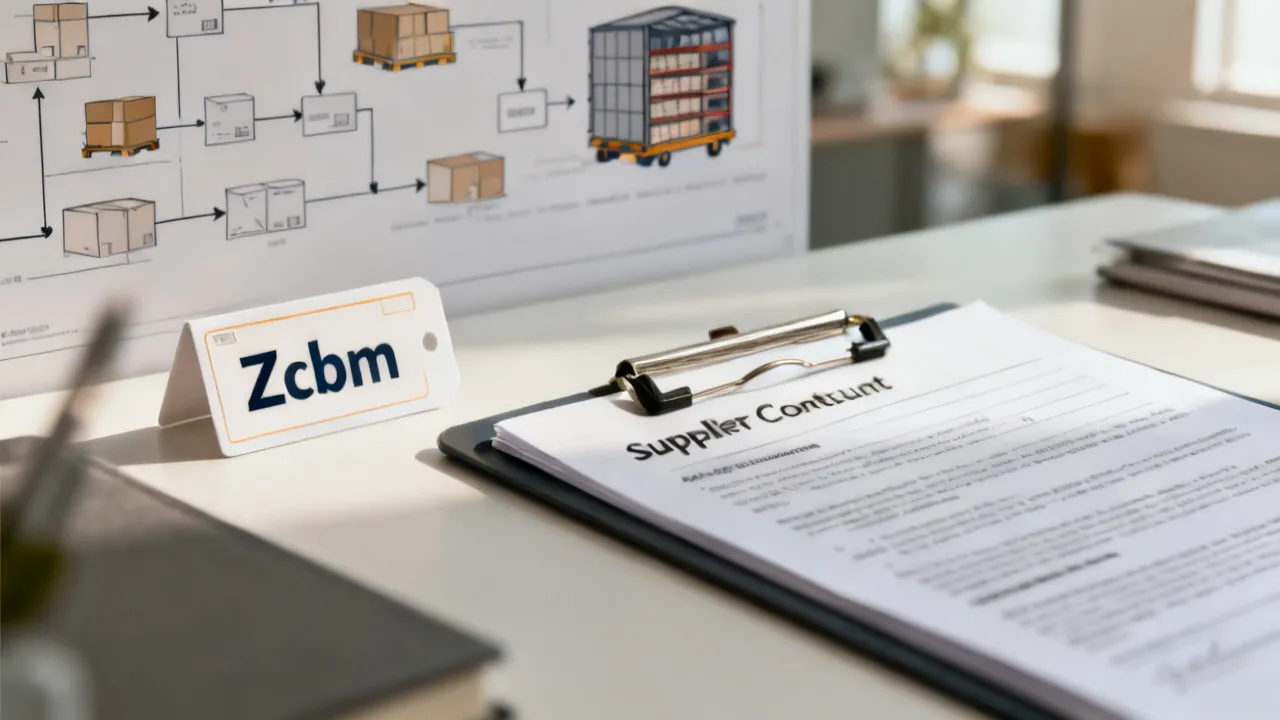
Critical Overview: What “Zcbm” Means for Procurement Decisions
When you’re dealing with Zcbm, the core question is rarely “Is it available?”—it is how reliably it can be sourced, documented, and integrated into your existing purchasing workflow. In practice, Zcbm is often treated as an operational identifier tied to procurement controls, supply-chain traceability, and internal standardization. That means your most important early actions are: confirming the product or service scope, validating documentation requirements, and aligning supplier capabilities with your quality and compliance expectations.
Because buyers frequently encounter uneven information—especially around pricing—this guide focuses on decision factors you can verify: supplier competence, lead-time stability, documentation sufficiency, and quality-control fit. It also covers how to structure internal checks so that purchasing teams can move from inquiry to purchase with fewer surprises.
In many organizations, procurement doesn’t fail because the “right item” can’t be found—it fails because the “right item” is defined differently across teams, suppliers provide inconsistent paperwork, acceptance criteria aren’t aligned to inbound checks, or change-control communication is missing. Zcbm, as a procurement-relevant identifier, is a magnet for these failure modes. The goal is to use it as a predictable anchor: you define it once, map it correctly everywhere, demand the same evidence every time, and record outcomes so that future decisions become easier.
Understanding the “Zcbm” Keyword in Business Context
In many organizations, keywords like Zcbm function as shorthand within procurement documentation. They may represent a material code, a configuration, a compliance category, or a standardized request format used across teams. Regardless of the exact internal meaning, the buyer-facing impact is consistent:
- Procurement alignment: Buyers must map Zcbm to the correct specification, revision, or contractual requirement.
- Traceability needs: Zcbm-linked items often require consistent paperwork (e.g., certificates, lot identifiers, or conformance statements).
- Process repeatability: Teams expect the same Zcbm request to yield stable outcomes across orders.
For objectivity, treat Zcbm as a procurement-relevant identifier until you confirm its defined scope in your own internal system or supplier documentation. That means you should not assume Zcbm is always “the same thing” across suppliers, business units, sites, or even time periods. If your company uses Zcbm internally, it may be connected to a controlled document, an ERP item record, or an approved supplier/approved method pairing. If it comes from a supplier, it may be their internal SKU, product family name, or a packaging/configuration label.
Because the most costly misunderstandings begin with definitions, you should verify:
- What Zcbm maps to in your internal specification system (drawing, technical data sheet, standard, or service procedure).
- What revision or version is associated with the Zcbm identifier.
- What acceptance criteria and documentation package are expected for that mapping.
- Whether Zcbm applies to a single product or a family of products with different variants that still share a common code.
Once you have these, you reduce variability and you can ask for comparable quotes. In procurement, comparability is a form of risk reduction.
Cost and Price Formation: Why “Zcbm” Quotes Differ
Buyers often ask about “price” first. However, in procurement reality, price is shaped by factors that vary by supplier and transaction structure. Without making unverifiable claims, it’s still possible to explain the most common cost drivers that influence quotes for items or services associated with Zcbm:
- Specification complexity: If Zcbm refers to a configuration requiring tighter tolerances, reporting, or testing, costs typically increase.
- Documentation requirements: Certificates, inspection reports, or compliance packages can add administrative and testing costs.
- Minimum order quantities (MOQs): MOQs can effectively change your unit cost even if the supplier’s quoted price appears comparable.
- Lead time and scheduling: Rush timelines and constrained production slots usually cost more.
- Shipping and incoterms: Who pays freight, insurance, duties, and handling depends on contractual terms.
- Exchange rates and commodity inputs: Where materials are globally sourced, currency and input volatility can affect price.
To keep purchasing decisions sound, request quotes using a standardized requirement sheet—the one that clearly states what you mean by Zcbm (scope, revision, acceptance criteria, required paperwork, and delivery expectations).
However, it’s useful to go one layer deeper. Quote differences often aren’t “real” differences in Zcbm; they are differences in how suppliers interpret what is included. Consider the following examples:
- Documentation inclusion ambiguity: One supplier might quote “unit price only” while another includes certificate sets, batch traceability statements, and inspection records. Without standardization, the cheaper quote may simply be incomplete.
- Testing level mismatch: “Conformance” can mean different things—self-certification, third-party inspection, or results from tests performed at different stages. If Zcbm expects a certain level of test evidence, you must ask for that level explicitly.
- Packaging and labeling expectations: If your receiving workflow requires special labeling (lot number placement, barcoding, compliance marks), suppliers may quote different packaging costs.
- Change-control scope: If the Zcbm definition includes specific material substitutions or tolerances, a supplier might price differently based on whether they plan to use standard stock or a dedicated run.
- Nonconformance handling: Prices can implicitly include (or exclude) risk allowances for rework/replacement. If your contract requires faster corrective actions, you should expect pricing differences.
To handle these issues transparently, compare quotes by separating them into comparable line items: base item cost, documentation package cost, inspection/testing cost, packaging/labeling cost, logistics cost, and any expediting or premium fees. This is especially important when Zcbm is connected to regulated or audit-sensitive environments where the “paperwork” is not optional.
Supplier Selection: What to Verify Beyond Marketing Claims
Supplier quality is the most important determinant of whether Zcbm procurement stays predictable. Industry experience consistently shows that “good suppliers” are not only those who provide an initial quote; they are those who can maintain conformance after volume changes and on subsequent orders. In practical terms, evaluate suppliers on the following:
1) Scope clarity and response quality
A strong supplier will respond with clear answers: what they interpret Zcbm to mean, how they propose meeting your spec, and what documentation they include in each shipment or delivery cycle.
In a real procurement workflow, this “response quality” is visible in several ways:
- They ask clarifying questions instead of assuming definitions.
- They reference the correct revision/version and confirm which documents they will use to produce/inspect.
- They provide a list of documentation deliverables that matches your requirement sheet.
- They specify lead time not just as a single date, but as a range with production cutoff logic.
If a supplier gives answers that are vague—“we can provide certificates” without specifying type, or “lead time is standard” without a range—then Zcbm may become an ambiguity generator rather than a procurement anchor.
2) Traceability and documentation discipline
Look for evidence that the supplier can consistently produce the paperwork required for Zcbm-related transactions. This may include certificates of conformity, batch/lot traceability, test results, or inspection evidence—depending on your industry and internal requirements.
Documentation discipline is not only about having forms. It is about delivering the right evidence at the right time and with the right linkage. Procurement teams commonly encounter issues like:
- Certificates that do not reference the specific lot number shipped.
- Test reports that reflect outdated test methods or a different configuration than the one shipped.
- Documents delivered late, forcing teams to chase evidence after receipt.
- Documents that are generic templates rather than filled with actual batch-specific information.
To assess this, you can request sample documentation from a prior similar order. You can also specify, in your requirement sheet, what the documents must reference (e.g., lot number, PO number, Zcbm code, revision). The more explicit the linkage, the lower the audit and operational friction.
3) Quality-control workflow fit
Your organization should ensure that supplier inspection stages align with your acceptance testing strategy. A supplier may have rigorous internal controls but still be mismatched to your inbound inspection needs. Aligning process expectations reduces friction.
For example, your company might rely on inbound sampling to manage risk economically. If your supplier expects to perform final inspection only after delivery or provides only aggregated self-certification, your inbound checks may increase in intensity. Conversely, if the supplier provides detailed lot-level inspection results in advance, you might reduce inbound inspection scope.
Workflow fit typically includes:
- Whether inspection evidence supports your receiving tests.
- How exceptions are handled (return authorization, rework process, timeline for corrective actions).
- Whether the supplier can support upstream traceability (so you can locate the root cause, not just reject the shipment).
4) Operational stability
Stability shows up as consistent lead times, professional change-control behavior (e.g., notifying you of spec revisions), and a transparent approach when problems occur.
A supplier can be technically capable yet operationally unstable. If Zcbm is tied to controlled processes, instability can cause repeated delays and document gaps. Signs of stability include:
- They provide lead-time estimates that match actual delivery performance historically.
- They notify changes early (materials, production process, inspection method, labeling systems).
- They communicate proactively when delivery windows shift.
- They provide a clear escalation path when issues occur.
Local Considerations and “Nearby” Framing
If your keyword set references a city or country (for example, a location pattern like “{city}” or “{country}”), the guidance here applies to sourcing efforts nearby. Practically, “nearby” sourcing often improves communication speed, reduces certain transportation risks, and supports more responsive coordination for documentation corrections. It can also fit well with regional compliance expectations and business norms—such as how suppliers handle administrative turnaround times and how contract terms are interpreted.
When procurement teams focus on “nearby” suppliers, they frequently assume it automatically reduces cost. While it can reduce certain logistics components, the most consistent benefit is often governance and responsiveness:
- Faster feedback loops for document corrections (wrong certificate type, missing lot identifiers, incomplete declarations).
- More realistic scheduling for inspection appointments if your program requires pre-shipment review.
- Shorter lead times in some industries due to less capacity strain from global logistics.
- Better reliability during emergencies, especially when supplier escalation occurs across time zones.
However, “nearby” sourcing does not eliminate quality risks. If Zcbm is connected to strict technical or compliance requirements, you still need documentation discipline and process alignment. Distance can reduce friction, but it cannot substitute for verifying conformance evidence.
When Zcbm Relates to Compliance: Requirements You Should Confirm
Because Zcbm may be tied to compliance categories in some organizations, you should confirm the exact compliance requirements early—before purchase orders are issued. Avoid assumptions. Ask for:
- Which standards apply (industry or internal standards)
- What evidence is provided per shipment or delivery cycle
- How nonconformance is handled (rework, replacement, or refund terms)
- Change-control expectations if a supplier updates process inputs or specifications
These points are not about adding bureaucracy; they are about minimizing downstream disputes and ensuring your procurement records support audit-readiness.
In compliance-driven environments, procurement needs to be able to answer auditors and internal stakeholders quickly:
- What did we buy (scope, revision, configuration) under Zcbm?
- What evidence did we receive to demonstrate conformance?
- How did we handle nonconformance?
- What approvals or change-control steps were followed?
Zcbm should serve as a stable link between these answers. If Zcbm is vaguely defined or not mapped to revision-controlled documents, your documentation becomes fragmented and audit preparation becomes slow and error-prone.
Step-by-Step Procurement Approach for Zcbm (Conditions and Requirements)
Below is a practical, verifiable guide you can adapt. It’s written as an operational checklist—designed to reduce interpretation errors about what Zcbm entails in your organization.
| Stage | Step-by-Step Actions | Conditions / Requirements | Deliverables to Request |
|---|---|---|---|
| 1. Define the request | Write a Zcbm requirement sheet that includes scope, revision, acceptance criteria, and required documentation. | Zcbm must be explicitly mapped to your internal spec or supplier’s equivalent definition. | Specification confirmation, proposed documentation list |
| 2. Qualify suppliers | Shortlist suppliers based on capacity, relevant experience, and documented quality processes. | Suppliers should show consistent traceability practices for Zcbm-relevant items. | Quality overview, audit/inspection evidence (as applicable) |
| 3. Request structured quotes | Ask for itemized pricing based on scope, documentation package, testing level, lead time, and shipping terms. | Quotes must state MOQs, lead-time ranges, and what “included” means for paperwork and inspections. | Line-item quote, lead-time statement, documentation inclusions |
| 4. Validate compliance and paperwork | Confirm the exact documents you will receive per shipment tied to Zcbm. | Compliance evidence must be sufficient for your internal audit needs. | Sample certificate set or documentation templates |
| 5. Place a controlled order | Issue a purchase order that repeats critical Zcbm requirements, acceptance criteria, and change-control rules. | PO terms should define replacement/rework actions for nonconformance. | PO acknowledgment from supplier |
| 6. Inspect on receipt | Perform inbound checks consistent with the acceptance criteria you specified. | Inspection procedure must match the agreed evidence and traceability expectations. | Receiving report, exception records (if any) |
| 7. Close the loop | Review outcomes, record performance, and update internal sourcing rules for future Zcbm buys. | Document deviations and supplier corrective actions. | Supplier scorecard input, corrective action notes |
To strengthen this checklist, procurement teams should include two additional “controls” that prevent the most common errors: pre-order confirmation and post-receipt evidence reconciliation.
Additional Control A: Pre-order confirmation (before the PO is issued)
Before you place a controlled order, run a short “definition lock” meeting or review. The aim is to ensure that every stakeholder—purchasing, quality, logistics, and legal—agrees on the operational meaning of Zcbm.
At minimum, confirm:
- The exact Zcbm scope (what is included and excluded).
- The revision mapping (what version is being procured and accepted).
- The documentation package list and delivery timing (e.g., “shipped with goods” vs “sent within 5 days of shipment”).
- The acceptance criteria and how they will be verified on receipt.
- Change-control triggers and approval pathways.
This step often prevents costly “late discovery” problems. For example, a supplier may quote a product family that shares a code but has variant differences; pre-order confirmation ensures those variants are resolved.
Additional Control B: Post-receipt evidence reconciliation (within a defined window)
After delivery, procurement should not only inspect the goods; it should also reconcile the evidence package against your requirement sheet. Create a simple reconciliation process:
- Verify each document references the PO number and Zcbm scope.
- Verify documents reference the lot/batch identifiers shipped.
- Verify test results or compliance statements correspond to the required acceptance criteria level.
- Verify the document set is complete and delivered by the agreed timeline.
This reconciliation can be done by quality, procurement operations, or a shared role. The key is that evidence gaps are captured early—while the supplier can still correct them quickly.
Supplier Collaboration: Contract Language That Prevents Disputes
Even when suppliers are reputable, procurement problems often arise from ambiguous terms. For Zcbm-related transactions, consider clarifying:
- Specification boundaries (what exactly is being supplied under the Zcbm definition)
- Document ownership and timing (when and how documents are delivered)
- Nonconformance outcomes (replacement vs. corrective action process)
- Change-control triggers (what requires written approval)
- Inspection responsibilities (who checks what, at which stage)
This reduces costly back-and-forth later and improves audit trails.
It also helps to include explicit “mechanisms” in contract language. For example, disputes often emerge not from the existence of a requirement but from uncertainty about what happens when the requirement is not met. Your contract should specify:
- How quickly the supplier must respond to a nonconformance notice.
- Whether the supplier must provide a containment action plan within a specific timeframe.
- Whether additional verification testing is required at the supplier’s expense.
- Whether replacement shipments pause acceptance or whether goods can be quarantined pending review.
When Zcbm is compliance-linked, auditors may also ask how you ensured that contract requirements were actually met. Clear contract mechanisms reduce both operational risk and audit risk.
Industry Perspective: Risk Controls That Matter for Zcbm
From an industry expert’s standpoint, the most effective procurement programs treat each Zcbm engagement as a risk-managed process rather than a one-time purchase. Common risk controls include:
Quality risk
Mitigate by aligning acceptance criteria, requesting evidence that matches those criteria, and performing inbound verification where it’s economically justified.
More concretely, quality risk mitigation can be scaled based on risk severity:
- Low risk: Rely on documentation plus basic receiving checks.
- Moderate risk: Perform lot-level checks for key attributes; verify paperwork completeness.
- High risk: Use pre-shipment verification, enhanced sampling, or third-party inspection (depending on the nature of the item/service).
Zcbm often signals that the item/service has a controlled meaning, which implies that “high risk” handling may be appropriate more often than teams initially think. A stable procurement program recognizes this and sets appropriate inspection intensity.
Documentation risk
Mitigate by requiring a consistent documentation package tied to the Zcbm scope, and by confirming whether digital formats are acceptable internally.
Documentation risk is not only about completeness; it’s also about usability. A document package can be “complete” but still unusable if it lacks required linkage (lot number, revision, date), uses inconsistent naming conventions, or is delivered in a format your auditors cannot review easily.
To reduce documentation risk, procurement can:
- Standardize document naming and version control (e.g., PDF templates with required fields).
- Require documents to be delivered via approved systems (email vs portal vs ERP attachment) based on your internal rules.
- Set a “document completeness date” aligned with your internal receiving process.
Schedule risk
Mitigate by confirming lead-time ranges, production cutoffs, and backup plans when a delivery window slips.
Schedule risk is especially relevant when Zcbm is connected to a controlled revision or testing requirement. Suppliers may need dedicated production slots to ensure the correct configuration. If you only ask for a single date, you can end up surprised when a production cutoff shifts.
To manage schedule risk:
- Ask for lead-time ranges with a defined logic (e.g., “X weeks from PO confirmation, subject to material availability”).
- Confirm production cutoff dates for documentation and shipment.
- Define what happens if delivery is late (expedite options, substitution rules, or cancellation rights).
Commercial risk
Mitigate by ensuring quotes are comparable—i.e., that the “price” you’re comparing actually includes the same level of testing, packaging, and paperwork.
Commercial risk is often underestimated. When Zcbm-related quotes differ, the cheapest line item may not be the cheapest total cost. Procurement should consider total landed cost and total compliance cost.
Examples of total cost mismatches include:
- Lower unit cost but higher rework cost due to documentation errors.
- Lower quote but increased internal inspection time because supplier evidence doesn’t match acceptance criteria.
- Lower quote but slower corrective action, which increases production stoppage risk for the buyer.
A comparability approach reduces this commercial risk.
Procurement Team Readiness: Internal Coordination Checklist
Before purchasing, the business should confirm internal readiness. If different departments interpret Zcbm differently, outcomes become inconsistent. Recommended internal alignment includes:
- Purchasing aligns the scope with documentation requirements.
- Quality aligns acceptance criteria with how the supplier tests.
- Legal/Contracts validates change-control and nonconformance terms.
- Logistics verifies incoterms, packing requirements, and receiving constraints.
This internal coordination can be operationalized by a brief internal “Zcbm brief” document. The brief should define the operational meaning of Zcbm, including the acceptance criteria and documentation package. Then purchasing can reuse the brief for future requests to reduce ambiguity and speed up onboarding of new suppliers.
Practical Example: How Zcbm Ambiguity Creates Procurement Failures
To make the risk dynamics concrete, consider a scenario many procurement teams have faced: a buyer requests “Zcbm” without a clear mapping to revision-controlled specifications, expecting the supplier to know. The supplier provides a product that matches a general description but differs in tolerance or labeling requirements. The shipment arrives, the inbound inspection flags nonconformance, and the buyer attempts to obtain missing paperwork. Meanwhile, the supplier argues that documentation scope was “standard” and that Zcbm is a general code rather than a controlled specification revision.
This scenario has three root causes, all of which a Zcbm procurement governance process can prevent:
- Definition lock failure: Zcbm was not mapped to a specific revision/specification boundary.
- Evidence mismatch: The documentation package did not include the specific evidence type expected.
- Contract mechanism gap: The agreement did not define a clear nonconformance handling pathway and timeline.
Once these are addressed—by using a requirement sheet, structured quotes, explicit document expectations, and clear contract language—procurement outcomes become more predictable.
Practical Example: Comparable Quotes and “Hidden” Cost Components
Another frequent procurement issue: two suppliers quote similar unit prices for Zcbm-related items, but one quote is materially more expensive once the buyer accounts for logistics, inspection, and documentation. How does this happen?
- Supplier A includes test certificates and lot traceability statements with each shipment; Supplier B provides only a generic certificate on request.
- Supplier A ships using an incoterm that includes handling at origin; Supplier B uses a term that shifts those handling fees to the buyer.
- Supplier A quotes lead time as “standard” but provides schedule flexibility; Supplier B quotes a tight lead time that requires premium production scheduling fees.
By structuring quotes with line-item breakdowns—documentation, testing, logistics, MOQs, and lead-time premiums—you prevent the buyer from comparing “apples to oranges.”
FAQs
Q1: What is Zcbm in procurement?
Zcbm is typically used as an identifier within procurement workflows—often connected to a specific scope, configuration, or documentation category. Because the exact meaning can vary by organization, you should confirm its definition against your internal specification or supplier documentation.
In some environments, Zcbm may function as an ERP item code or a procurement “request type” that triggers particular quality and documentation requirements. In other environments, it may be a shorthand used in email threads and RFQs as a proxy for a broader technical requirement. Either way, treat it as a trigger for verification: you map it to a concrete scope and evidence expectations before purchase.
Q2: How do I compare supplier quotes for Zcbm fairly?
Request structured, line-item quotes that separate scope, documentation package, testing level, lead time, MOQs, and shipping/incoterms. This ensures you’re comparing comparable deliverables under the same Zcbm definition.
To make comparability easier, you can also require suppliers to fill out the same quoting template. The template should include explicit fields such as “documentation included,” “certificate type and what it references,” “test method reference (if applicable),” and “inspection level.” If suppliers cannot populate these fields, that is itself a signal of communication maturity and risk.
Q3: What documents should I ask for with a Zcbm order?
Ask the supplier to specify which compliance or conformance documents they provide per shipment or delivery cycle. Common categories include certificates of conformity and traceability evidence, but the exact set depends on your industry and internal acceptance requirements.
When possible, specify document content and linkage requirements. For example, you might require that documents reference: PO number, Zcbm scope or configuration identifier, lot/batch ID, revision/version, and test/inspection results tied to shipped quantities. This turns “we will provide certificates” into a measurable deliverable.
Q4: What should I include in the purchase order for Zcbm?
Include the Zcbm scope definition, revision/version mapping, acceptance criteria, documentation timing expectations, nonconformance handling terms, and change-control requirements. PO language should reduce ambiguity about what “conformance” means.
Also consider adding an “evidence checklist” as an attachment to the PO or as a referenced document. This reduces variation between contracting staff and receiving/quality staff and provides a clear standard for reconciliation after delivery.
Q5: Does sourcing “nearby” improve outcomes for Zcbm?
Often, yes. Sourcing nearby can improve communication speed and reduce some logistics uncertainties, which helps when documentation corrections or specification clarifications are needed. However, quality and documentation discipline remain the primary determinants of reliable procurement outcomes.
Nearby sourcing can be particularly useful when documentation errors are frequent and expensive to correct. If your internal process relies on a short turnaround time for evidence verification, then proximity can reduce the likelihood of evidence delays.
Q6: How can I reduce risk if Zcbm requirements are complex?
Use a requirement sheet, validate the supplier’s interpretation early, request sample documentation, and incorporate structured acceptance criteria. Where complexity is high, consider phased ordering or pre-shipment verification aligned to your internal quality procedures.
Phased ordering can include an initial pilot lot, a reduced quantity test shipment, or an engineering sample run. The key is to define acceptance criteria and documentation expectations for the pilot so that the subsequent full order is smoother and less ambiguous.
Reliable Sources and Standards (Non-Exaggerated Context)
For readers who want to ground sourcing practices in recognized frameworks, the following reputable references are commonly used in procurement and quality management:
- ISO 9001 (quality management systems)—a widely adopted standard describing requirements for consistent quality processes. Source: International Organization for Standardization (ISO).
- ISO 22000 (food safety management systems)—relevant where Zcbm-like identifiers tie into food or processing controls. Source: ISO.
- ISO 14001 (environmental management systems)—relevant when compliance expectations include environmental controls. Source: ISO.
- OECD Due Diligence Guidance—commonly used for responsible supply-chain due diligence in relevant industries. Source: Organisation for Economic Co-operation and Development (OECD).
These references support the general guidance in this article: clarify requirements, enforce documentation discipline, and manage risks through structured quality and due diligence practices.
It’s important to note that standards provide frameworks, not automatic fulfillment. Zcbm-related procurement still requires you to define the specific scope, specify required evidence, and verify that the supplier’s process results match your acceptance criteria.
Conclusion: Turning Zcbm From an Identifier Into a Predictable Procurement Result
To procure items or services tied to Zcbm with confidence, focus on what you can verify: clear scope mapping, supplier documentation discipline, fair quote comparisons, and contract terms that define conformance and nonconformance outcomes. When you treat Zcbm as a process-critical identifier rather than a vague label, your organization can reduce rework, limit disputes, and maintain consistent performance across purchase cycles.
If you want procurement to be predictable, the operational pattern is consistent: define Zcbm precisely, demand evidence aligned to that definition, structure quotes so they are comparable, and build internal alignment so receiving and quality verification are ready on day one. When this pattern is repeated and the outcomes are recorded, future Zcbm procurement decisions become faster and more reliable—because the organization learns what “good” looks like for each Zcbm scope, supplier, and documentation package.
In short: Zcbm matters because it can represent more than an item code. It can represent a controlled expectation of scope, evidence, and conformance. Procurement success happens when that expectation is managed intentionally, not assumed.
Optional Image Use Note
If you use the provided cover image prompt, consider pairing the article with a visual that communicates procurement discipline—such as document checklists, traceability concepts, or a supplier contract review scene—so readers immediately associate Zcbm with structured sourcing practice.
-

A Guide to Cost-Efficient Small Electric Cars for Seniors
-
Mastering Debt Consolidation: Boost Your Credit Score and Manage Interest Rates
-
Your Guide to Loans, Credit Checks, and Interest Rates
-
Affordable Independent Living: Finding the Right Senior Housing
-
Guide to Senior Living Apartments: Affordable and Comfortable Environments